

Dutch cap
The Netherlands government signals the end for gambling ads

The Dutch move to extinguish online gambling advertising entirely.
In +More: Pennsylvania Supreme Court rules skill games illegal.
Rigged: Controversy erupts over UFC Freedom 250 at the White House.
Predictions: Gensler files amicus brief in Kalshi’s Ohio court case.
Entain’s trademark gambit runs into intellectual property logic.
Yaspa is an award-winning fintech delivering personal intelligence through instant payments. Powered by open banking and AI, Yaspa’s Intelligent Payments combine Pay by Bank transactions with verified customer insights to protect players and power safer gambling. The platform also provides a full suite of payment and account verification services, using pan-operator financial insights and bank-grade security to reduce friction and fraud, strengthen compliance and improve payments performance. Yaspa operates across the UK, Europe and the US, and is regulated by the UK’s Financial Conduct Authority.
Learn more at www.yaspa.com
Verbied het!
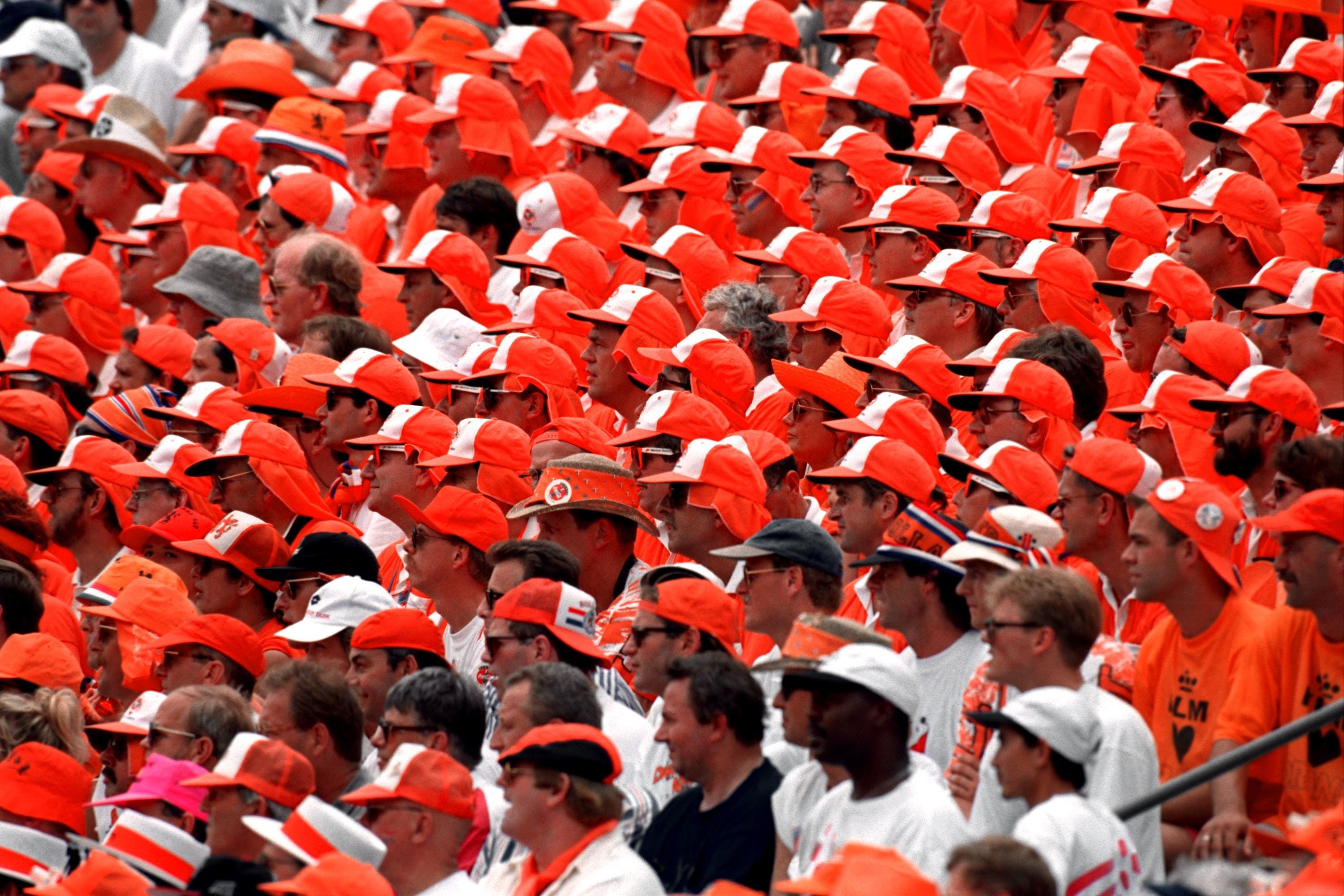
Total political football: The Netherlands is preparing the most aggressive tightening of its online gambling regime since the market opened, with the State Secretary for Legal Protection, Claudia van Bruggen, proposing a total ban on advertising.
The minister is also proposing an end to bonuses such as free bets on account opening, an overarching deposit limit, a strengthened CRUKS self-exclusion system and a clampdown on illegal activity.
The measures require legislation before they take effect, and Van Bruggen will pursue them through a bill alongside a longer-term program on gambling harm.
Doing it for the kids: Van Bruggen placed the situation with regard to younger people at the forefront of the reasoning for the total ban.
“I find it particularly concerning that more and more people, and especially young people, have started gambling online and are getting into trouble as a result,” she said.
“It is high time to reverse this trend.”
Ratchet: The advertising proposal is the latest attempt on the part of the Dutch authorities to severely limit the marketing of the licensed sector. The Netherlands already bars the use of role models in gambling adverts and prohibited untargeted remote gambling advertising from July 2023. A total ban on sports sponsorship followed in July 2025.
Officials have concluded that those steps did not cut public exposure sufficiently, since young people still encounter substantial volumes of advertising.
The government is effectively conceding that successive partial bans have failed to deliver.
On deposits, the plan builds on limits introduced under Van Bruggen’s predecessor Franc Weerwind. That regime, introduced in 2024, set player loss limits of €150 for those aged 18-23 and €350 for everyone aged 24 and over, with affordability checks already triggered on monthly deposits above €300 and €700 for the respective age bands.
Subsequently, the Netherlands Gambling Authority (KSA) reported that requests to raise deposit limits fell below 50% of the licensed player base.
Meanwhile, the share of players breaching their monthly deposit allowance dropped from 9.7% to 2.2% and average monthly losses fell 31%, from €116 to €80.
Blame game: Willem van Oort from Gaming in Holland, said the idea of a national advertising ban was no surprise. “A ban has been widely anticipated given the political sentiment in The Hague against the online gambling sector, “ he told C+M.
“The core political logic would appear to be that once the legislation was passed to make the market legal, rates of gambling rose and with it the rates of problem gambling,” he said.
“Therefore, goes the thinking, the legislation has been to blame – despite the fact that online gambling participation in the Netherlands had been steadily rising long before the legal market opened.”
Bad name: Moreover, the memory among the wider public of what Van Oort termed the “deluge of gambling ads” in the immediate wake of the opening of the market is still fresh. “It was inescapable,” he said.
The anti-gambling sentiment is compounded by the fact that the industry has no friends.
The tax argument – that regulation brings with its revenues – “carries no weight,” while public support for a new prohibition is significant, though there appears to be enough political realism in the Dutch parliament to prevent that from happening.
“Libertarianism has no pull when it comes to gambling in the Netherlands,” said Van Oort.
“In fact, there is broad public consensus that gambling is simply bad.”
Black flag: The only consolation is that the move to all gambling advertising would necessitate primary legislation and therefore could take two years or more to come into force.
But, as Van Oort argued, with the market already so constricted it is not likely that any regulated operators will be thinking of taking advantage of the two-year grace period.
Instead, as has been the case with the restricted landscape, it will be the black-market operators that will continue their efforts. The KSA has acknowledged that the legal market’s share of gross gaming revenues fell to roughly 49% in early 2025.
Trade bodies last year put the black market at around 25% of Dutch gambling activity.
Licensed operators attribute the leakage to taxation – now 37.8% of GGR – and to the advertising curbs.
Reclaim the market: But, as Van Oort noted, under the new proposals the only solution offered to the issue of both GGR and players moving to the offshore market is stricter enforcement.
“Specific proposals for curbing the black market appear to rely, to a significant degree, on wishful thinking,” he said.
“Even worse, from a player perspective it is all stick and no carrot. If the goal is to reclaim the market, you will need a certain amount of buy-in from players. I see this as a major missed opportunity.”
“Lastly,” Van Oort concluded, “enforcement is very expensive. If illegal gambling enforcement will have to compete for appropriations with, for instance, hospital staffing, drugs enforcement or social benefits, illegal gambling enforcement will inevitably lose out.”
“Because of this, reclaiming the market cannot rely on enforcement powers alone.”
More Dutch fines
Bad timing: The KSA has fined online operator 711 €886,000 after finding repeated failures in its duty-of-care obligations. Reviewing 10 customer cases between February 2022 and June 2024, the regulator identified shortcomings in every file, including inadequate analysis of risky gambling behavior and insufficient interventions. Separately, the regulator warned TOTO Online over social media promotions.

Increase Operator Margins with EDGE Boost Today!
EDGE Boost is the first dedicated bank account for bettors.
Increase Cash Access: On/Offline with $250k/day debit limits
No Integration or Costs: Compatible today with all operators via VISA debit rails
Incremental Non-Gaming Revenue: Up to 1% operator rebate on transactions
Lower Costs: Increase debit throughput to reduce costs against ACH/Wallets
Eliminate Chargebacks and Disputes
Eliminate Debit Declines
Built-in Responsible Gaming tools
To learn more, contact Matthew Cullen, chief strategy officer on Matthew@edgemarkets.io
+More
Pennsylvania: The state Supreme Court has ruled that so-called skill games are subject to state gaming laws, delivering a major victory for the regulated casino industry and overturning a 2024 Commonwealth Court decision that had found the machines were not illegal gambling devices. The Supreme Court described the lower court’s reasoning as “deeply flawed” and granted a 120-day enforcement pause to avoid disruption. The ruling is a significant setback for Pace-O-Matic, which has been central to years of litigation.
UK Gambling Commission enforcement director John Pierce used his keynote address at the Gambling Anti-Money Laundering Group annual conference to warn operators that AML controls must keep pace with evolving criminal threats, including AI-generated documents, mule accounts and increasingly sophisticated fraud. Pierce highlighted ongoing weaknesses in customer risk assessments, source-of-funds checks and due diligence processes, while stressing that AML reviews should be risk-based rather than a “tick-box” exercise.
Chicago: Mayor Brandon Johnson plans to ask a City Council committee to repeal the city’s recently approved video gambling ordinance, according to CDC Gaming. The move would reverse a measure adopted as part of Chicago’s 2026 budget and reignite debate over the economic benefits of video gaming terminals versus concerns about social harms, neighborhood impacts and potential competition with the planned Bally’s Chicago casino project.
Wisconsin: Gov. Tony Evers has begun formal discussions with leaders of the state’s 11 federally recognized tribes to negotiate updated gaming compacts needed to launch statewide mobile sports betting. The talks follow the legalization of online sports wagering in April and will determine how the tribal-led market operates under Wisconsin’s hub-and-spoke model, with federal approval also required before launch.
Commercial
Mindway AI has launched Gamalyze Sports, a football-themed version of its gamified responsible gambling tool. Designed specifically for sports bettors, the solution replaces traditional questionnaires with interactive gameplay to improve engagement and identify at-risk behavior. Backed by neuroscience and AI research from Aarhus University, the platform delivers personalized risk assessments and intervention plans while providing operators with real-time player protection insights.
UFC controversy
Freedom writers: A controversy erupted around UFC Freedom 250 at the White House after former UFC champion and commentator Daniel Cormier briefly posted, then deleted, what he claimed were messages from Eric Trump seeking insider information about the event’s fights.
According to screenshots circulated online, the messages allegedly asked whether any fighters were carrying injuries and whether any bouts were “rigged.”
Cormier’s now-deleted post criticized what he described as “insider behavior” that could undermine confidence in the sport.
However, the authenticity of the messages quickly came into question after the post was removed.
Cormier subsequently suggested there may have been suspicious activity involving his social media account.
Fake news: Eric Trump strongly denied the allegations, calling the screenshots “completely fake” and claiming they were AI-generated.
He said he had never communicated with Cormier and accused critics of spreading misinformation.
Still, the dispute added another layer of controversy to UFC Freedom 250, a politically charged event hosted on the White House grounds and attended by President Donald Trump.
The episode reignited debate over betting integrity in combat sports and highlighted growing concerns about the use of AI-generated content in public controversies.
Gensler intervention
Friend indeed: Former SEC and CFTC chair Gary Gensler has entered the legal battle over prediction markets, filing an amicus brief with the Sixth Circuit Court of Appeals arguing that federally regulated event contracts should not override state gambling laws.
The brief was submitted in support of Ohio regulators opposing Kalshi’s sports-related prediction markets.
It contends that Congress never intended the Commodity Exchange Act to preempt state gaming regulation.
Right from wrong: Gensler has been joined by the American Gaming Association, the Indian Gaming Association and advocacy group Better Markets, all of which argue that sports event contracts offered by prediction market platforms resemble gambling products traditionally regulated by states and tribal authorities.
Gensler’s intervention is notable because he previously led both federal agencies most closely associated with financial market regulation.
Talking to Bloomberg, Gensler said: “To see somebody trying to kind of tuck into that whole thing, wow, the Commodity Futures Trading Commission was given exclusive jurisdiction and preempts the states for sports betting.”
“Nothing could be further from what we were working on,” the former SEC chief added.
A Kalshi spokesperson pushed back against Gensler’s argument, saying he is “wrong” about what qualifies as a swap.
+More predictions
Kalshi contempt: The Nevada Gaming Control Board has asked a state court to hold prediction market operator Kalshi in contempt, alleging it failed to comply with a May 18 order requiring the company to geofence Nevada users from sports, election and entertainment event contracts. The regulator is seeking significant monetary penalties and reiterated its position that such contracts constitute licensed wagering activity under Nevada law.
Kentucky: The Coalition for Fair Markets, whose members include Kalshi, Polymarket and Crypto.com, has sued Kentucky over its 14.25% tax on prediction market transactions. The group argues the levy is preempted by federal CFTC regulations and unfairly exceeds the state’s 9.75% tax on horse-race wagering.
New Mexico: The CFTC has sued New Mexico after the state sought to apply its gaming laws to prediction market operator Kalshi. The regulator argues that federally regulated prediction markets fall under CFTC jurisdiction and are preempted from state gaming oversight. New Mexico maintains Kalshi is operating an unlicensed sports-betting platform, mirroring claims made by tribal plaintiffs.

⚽ Ready to reinvent player protection for the 2026 World Cup? 🌍
Mindway AI introduces Gamalyze Sports—our next-generation, gamified responsible gambling solution designed specifically for sports bettors.
Forget boring, static questionnaires that players ignore. Mindway AI turns player protection into an interactive football game, over a decade of research of neuroscience and behavioural research to analyse real-time decision-making on the pitch. By replacing retroactive surveys with active gameplay, it delivers an unbiased, highly engaging experience that builds genuine self-awareness for players, while giving operators deep behavioural insights straight to their dashboard.
Localised in 14 languages, it’s the ultimate way to safeguard fans this summer.
👉 Click here to try the Mindway AI Gamalyze Sports demo now!
Trademark fight
I see no ships: Entain’s bid to weaponize the trademark register against unlicensed operators has hit an early obstacle: the regulator it is lobbying does not accept the premise.
In a reply seen by SBC News to Entain’s group general counsel Simon Zinger, UK Intellectual Property Office (IPO) CEO Adam Williams said a public-policy assessment concerns “the intrinsic properties of the mark itself,” not the conduct of the applicant or how the mark is used.
He also disputed Zinger’s claim that Companies House already screens names against a regulator-approval list.
That is a direct rebuttal of Entain’s core theory, which depends on the IPO judging who is applying rather than what they are registering.
The Zinger sings his song: The underlying complaint is straightforward enough. Operating in Great Britain without a license is a criminal offence under Section 33 of the Gambling Act 2005, yet the register stays open to unlicensed operators serving UK consumers.
According to Zinger, this hands them the “commercial legitimacy that registration confers.”
Entain said it sampled 18 brands it believes target UK punters and found 14 held trademarks despite lacking a license, several registered in Curaçao or Anjouan.
Zinger floated two routes: refusal under the Trade Marks Act 1994’s public-policy provisions or a Companies Act parallel to the controls that already gate words such as “bank.”
He has also asked the Gambling Commission to lodge proactive objections during the two-month publication window.
The company insisted a “credible argument” remains, despite Williams’ response.
Shot across the bow: The episode extends a campaign so far aimed at football. In a May 7 submission to the Independent Football Regulator, Entain urged the body to confirm that income from unlicensed operators counts as funds connected to serious criminal conduct.
The company’s CEO Stella David accused six Premier League clubs of taking sponsorship from “criminal gambling firms.”
Letters to Premier League CEO Richard Masters followed, with a DCMS sponsorship consultation also pending.
Calendar
Jul 8-11: NCLGS summer meeting, San Diego
Jul 22-24: NCPG Annual Conference, Nashville
Nov 10: Gaming in Germany, Berlin

GuardDog, powered by Underdog, is a pioneering investment fund dedicated to fostering innovation in responsible gaming.
GuardDog supports and accelerates early-stage startups focused on building new and creative solutions to address problem gaming and further responsible gaming.
Ready to be one of the underdogs of responsible gaming?
Visit to apply: https://underdogfantasy.com/guarddog
An +More Media publication.
For sponsorship inquiries email scott@andmore.media.
