

Perp walk
Arizona files criminal charges against Kalshi

The move marks an escalation in the states’ rights fight.
In +More: Welsh parliament approves greyhound racing ban.
Wisconsin moves a step forward to OSB but Virginia iCasino fails.
The New York AG goes for Valve with loot boxes claims.
Yaspa is an award-winning fintech delivering personal intelligence through instant payments. Powered by open banking and AI, Yaspa’s Intelligent Payments combine Pay by Bank transactions with verified customer insights to protect players and power safer gambling. The platform also provides a full suite of payment and account verification services, using pan-operator financial insights and bank-grade security to reduce friction and fraud, strengthen compliance and improve payments performance. Yaspa operates across the UK, Europe and the US, and is regulated by the UK’s Financial Conduct Authority.
Learn more at www.yaspa.com
A charged situation
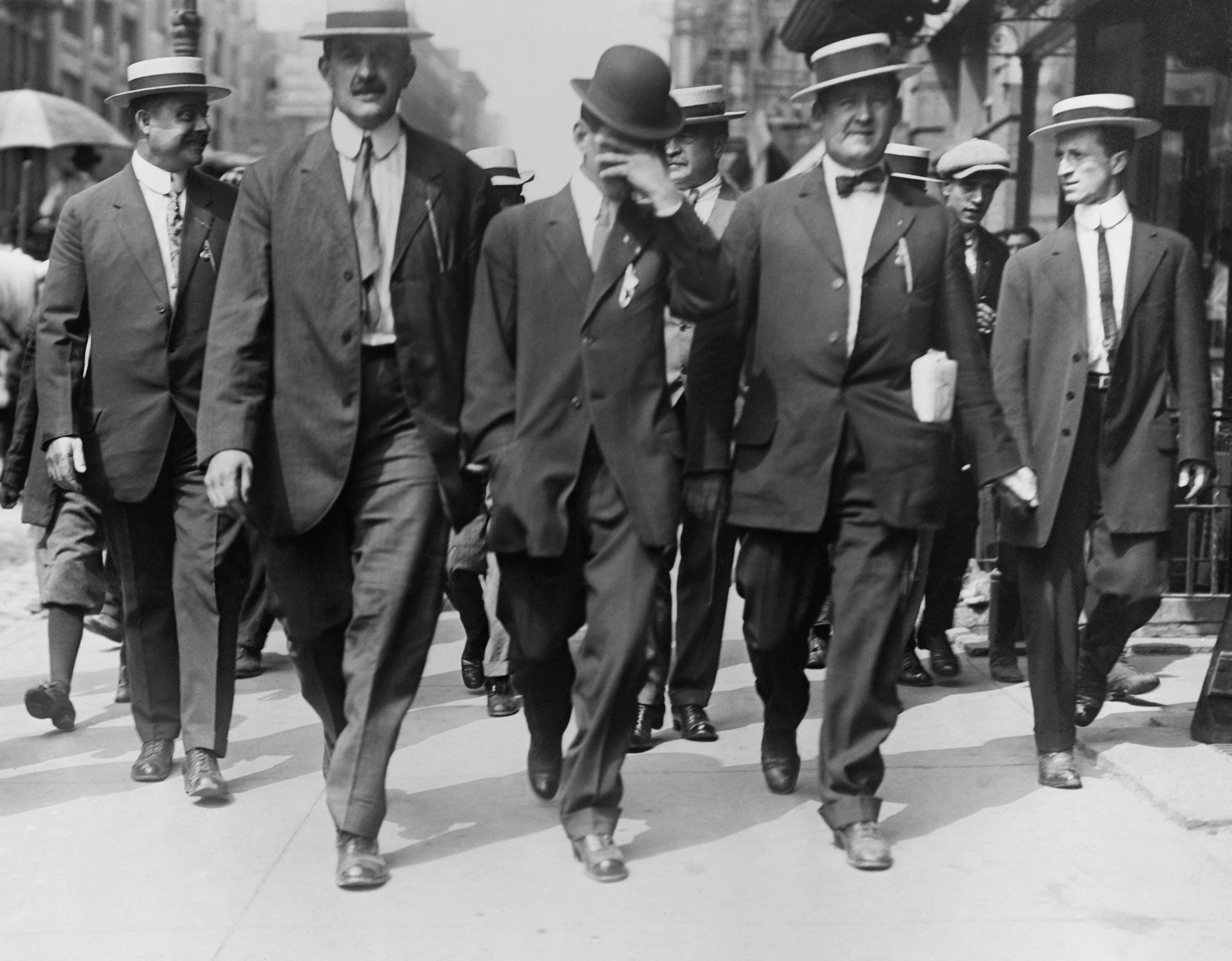
If you can’t do the time: Arizona has filed criminal charges against prediction market exchange Kalshi, accusing the company of operating an illegal gambling business; making it the first state to escalate its dispute with the platform to the level of criminal prosecution.
The charges, announced by Arizona Attorney General Kris Mayes, allege that Kalshi has been unlawfully accepting bets on Arizona elections and running an unlicensed gambling operation in violation of state law.
“Kalshi may brand itself as a ‘prediction market,’ but what it’s actually doing is running an illegal gambling operation and taking bets on Arizona elections, both of which violate Arizona law,” Mayes said in a statement.
Crimes and misdemeanors: The offenses cited in the complaint are misdemeanors, which carry lighter penalties than felonies.
But legal experts said the move represents a significant and potentially precedent-setting shift in how states choose to confront the fast-growing prediction market industry.
You’ve gone too far: Kalshi understandably pushed back forcefully against the charges, arguing that as a federally regulated entity it falls outside the reach of state gambling laws.
“States like Arizona want to individually regulate a nationwide financial exchange, and are trying every trick in the book to do it,” a company spokesperson said.
“As other courts have recognized and the CFTC affirms, Kalshi is subject to federal jurisdiction.”
Fight the power: CEO Tarek Mansour went further on Bloomberg TV yesterday, complaining that the Arizona move was a “total overstep.”
“These charges have nothing to do with gambling or the merits,” he said.
“If it was about gambling or the merits, they would let the judicial process run its course in the federal courts.”
He went on to say that “whatever long it takes, we’re going to fight for prediction markets.”
The CFTC immediately appeared to side with Kalshi, with chair Michael Selig calling the criminal prosecution “entirely inappropriate” and describing the dispute as fundamentally jurisdictional in nature.
Selig said the agency was reviewing its options.
Getting in first: The Arizona charges come just days after Kalshi moved to preemptively block the state’s gaming department from taking enforcement action against it; a legal tactic the company has increasingly employed as it faces regulatory pressure across the country.
Rather than waiting for states to pursue enforcement in state courts, Kalshi has made a practice of suing state officials in federal court first.
It is betting on federal preemption arguments to shield itself from state-level crackdowns.
Kalshi is now embroiled in disputes with roughly a dozen states, and it is not alone.
Fellow prediction market platforms Polymarket and Crypto.com have also faced a wave of lawsuits as regulators in Nevada, New Jersey, Maryland, Illinois, Montana and elsewhere push back against the industry’s rapid expansion.
Friend in court: The CFTC under the new leadership of Selig has staked out an industry-friendly position, asserting that it holds exclusive jurisdiction over prediction market platforms nationwide.
Last month, the agency underscored that stance by filing an amicus brief in support of Crypto.com in a closely watched Nevada case.
A ruling there could help determine how courts nationally approach the tug-of-war between state and federal authority over the industry.
I’ve got chills, they’re multiplying: Legal experts said the Arizona development significantly raises the stakes. “These are the first criminal charges of any kind filed against Kalshi in any court in the United States, but it will likely be the first of several,” said Daniel Wallach, a sports and gaming attorney.
Aaron Brogan, a lawyer specializing in alternative financial assets, warned that criminal sanctions could drive some exchanges to exit certain states altogether.
He argued that could be chilling for an industry that has grown rapidly accustomed to operating without regard for state-level gambling rules.
Many observers, including many with the US gaming sector, believe the issue is now on a trajectory toward the US Supreme Court.
“It only deepens the need for a federal appellate court, and ultimately the Supreme Court, to decide whether or not federal law preempts states’ enforcement of gambling laws,” Brogan said.
Federal moves
On and off: Rep. Greg Casar and Sen. Chris Murphy have introduced the BETS OFF Act, a federal bill that would prohibit all prediction market contracts tied to government actions or outcomes controlled by a single individual. Murphy argued such markets create dangerous incentives for insiders to influence policy decisions for financial gain, citing suspicious trades linked to military operations in Iran and Venezuela.
International moves
Argentina: A national court has ordered a nationwide ban on prediction market platform Polymarket, ruling it was operating as unlicensed gambling. Authorities directed internet providers to block access and required app stores to remove the platform. The case, brought by local lottery and casino bodies, cited risks including lack of age and identity checks, crypto-based betting and consumer protection concerns, with regulators concluding the platform effectively functioned as an illegal betting system.

GuardDog, powered by Underdog, is a pioneering investment fund dedicated to fostering innovation in responsible gaming.
GuardDog supports and accelerates early-stage startups focused on building new and creative solutions to address problem gaming and further responsible gaming.
Ready to be one of the underdogs of responsible gaming?
Visit to apply: https://underdogfantasy.com/guarddog
+More
Kazakhstan is expanding its casino footprint after President Kassym-Jomart Tokayev approved new designated gaming zones across Mangistau, Lake Alakol, Lake Markakol, Zaisan and Talgar. Previously restricted to Konaev and Lake Shchuchye, casinos will now be permitted in additional regions, though operations will be limited to slot machines and strictly targeted at foreign visitors under the revised framework.
The UK Gambling Commission has appointed former HMRC tax specialist Sue Young to an executive role, strengthening its expertise in financial oversight and compliance. Young brings extensive experience in tax enforcement and regulatory policy, reflecting the regulator’s increasing focus on financial risk, AML controls and industry integrity.
Gone to the dogs: Wales’ Senedd has approved legislation to ban greyhound racing, citing animal welfare concerns over injuries, fatalities and poor post-racing outcomes. The prohibition will take effect from April 2027, with a transition period to 2030 to wind down the industry and support rehoming. The move makes Wales the first UK nation to outlaw the sport, though industry bodies have criticized the decision and signaled potential legal challenges.

Chief Technical Officer – Montreal
Technical Compliance Manager – Cyprus
Regulatory Compliance Manager – Malta
Wisconsin OSB
Date for the dairy: Wisconsin has moved a step closer to legalizing statewide online sports betting after the state Senate approved legislation enabling mobile wagering via tribal operators, marking a significant shift in the state’s gambling framework.
The bill would allow residents to place bets online anywhere within state borders, provided the wagers are processed through servers located on federally recognized tribal lands.
This “hub-and-spoke” model effectively deems all bets to occur on tribal territory.
It aligns with existing constitutional requirements that all gambling be managed by the state’s Native American tribes.
Currently, sports betting in Wisconsin is restricted to in-person wagering at tribal casinos. Proponents argue that regulation would enhance consumer protections and generate incremental revenue.
However, the proposal remains contingent on several key hurdles. Any expansion would require renegotiation of tribal gaming compacts and approval from federal authorities before launch.
Cash cow: The bill has also exposed divisions among stakeholders. While several tribes and local sports franchises have backed the measure, commercial sportsbook operators have pushed back, arguing the framework, reportedly requiring a significant share of revenues to flow to tribal partners, would make market entry economically unattractive.
Attention now turns to Governor Tony Evers, whose support is uncertain amid concerns that not all tribes are aligned behind the proposal.
Virginia fail
Parallel lines: Virginia’s push to legalize online casino gaming has collapsed for 2026 after lawmakers failed to reconcile competing bills before the close of the legislative session, underscoring persistent political and regulatory friction around iGaming expansion in the state.
Two parallel efforts, Senate Bill 118 and House Bill 161, had advanced through committees earlier in the session.
They reflected growing interest in regulating a market that proponents argue already exists offshore.
Supporters framed iGaming as a means to “put guardrails” around illegal activity while generating new tax revenues and funding responsible gambling programmes.
However, despite early momentum, negotiations ultimately broke down over key structural issues, including regulatory oversight, tax allocation and the broader pace of gambling expansion.
Lawmakers also remained divided on whether Virginia’s existing fragmented regulatory framework, split across the Lottery Board, Racing Commission and other bodies, was fit for purpose without the creation of a dedicated gaming commission.
Just can’t get enough: Responsible gambling concerns were central to the debate. While amended versions of the bills introduced stronger player protection requirements, critics argued the measures did not go far enough to mitigate harm, particularly given the always-on nature of online casino products.
Earlier committee discussions highlighted unease about ensuring “legislation that really ups the game in terms of problem gaming.”
Some lawmakers were unwilling to advance proposals lacking robust safeguards.
The legislative impasse means Virginia will remain limited to B&M casinos and OSB for now, with iCasino effectively pushed to at least 2027 or beyond.
Previous amendments had already signaled limited political appetite by introducing multi-session approval requirements, further complicating near-term passage.

Increase Operator Margins with EDGE Boost Today!
EDGE Boost is the first dedicated bank account for bettors.
Increase Cash Access: On/Offline with $250k/day debit limits
No Integration or Costs: Compatible today with all operators via VISA debit rails
Incremental Non-Gaming Revenue: Up to 1% operator rebate on transactions
Lower Costs: Increase debit throughput to reduce costs against ACH/Wallets
Eliminate Chargebacks and Disputes
Eliminate Debit Declines
Built-in Responsible Gaming tools
To learn more, contact Matthew Cullen, chief strategy officer on Matthew@edgemarkets.io
Loot boxes
If at first you don’t succeed, try, try, try again: For the best part of a decade, plaintiffs have tried (and overwhelmingly failed) to convince US courts that loot boxes constitute illegal gambling.
Now, the New York Attorney General Letita James has sued Valve, alleging the company’s loot box system in games such as Counter-Strike and Dota 2 violates the state’s gambling legislation.
The accusation remains simple: Valve allows players to pay real money to open virtual containers that award randomized prizes of varying real-life value.
Computer says no: Legal precedent has not favored the plaintiff and falls into a similar murky legal box as sweepstakes, in that everyone continuously argues about whether a prize has a legally recognized monetary value and, thus, whether it can be classified as gambling.
Taylor v. Apple (2021): held that loot box prizes lacked “real-world transferable value.”
Coffee et al v. Google (2022): the court failed to find that in-game items satisfied the “thing of value” requirement.
Mai v. Supercell (2023): ruled that cosmetic items in mobile games were not gambling prizes under California law.
Insane in the membrane? One definition of insanity is: doing the same thing over and over again but expecting a different outcome.
In all of the above, the underlying consistency is that if game publishers prohibit resale in their terms of service, courts tend to treat virtual rewards as legally worthless (even if players trade them ‘informally’).
Got’cha? The New York AG argues that Valve has created a functioning market for loot box rewards through the Steam Community Market, where players buy and sell in-game items using funds that are then converted into Steam credit.
The complaint alleges that its own investigator sold a skin for Steam Wallet funds, then purchased hardware through Steam, and then got cash from a hardware shop in NYC.
It also alleges that Valve has long tolerated third-party marketplaces where those items can be sold for real money.
In for a penny, in for a pound: The AG’s legal action comes alongside a federal class-action suit filed in Washington.
The case alleges that Valve’s loot boxes are deliberately designed to mimic casino mechanics and generate billions in revenue from sales and marketplace commissions.
It seeks damages under Washington’s gambling-loss recovery statute and consumer-protection law.
The federal class action is much-of-a-muchness and offers little differentiation from complaints that weren’t upheld.
Corporate narcissism: Valve has responded to the New York AG with some outstanding corporate whataboutery.
The developer compared loot boxes to baseball cards, conveniently ignoring regulatory arguments around frictionless digital spending, in-built trading markets and the ability to open hundreds of boxes in minutes.
It also casts itself as the defender of gamers’ privacy and trading rights against regulatory outreach – the classic “poor me” approach and positioning as the bastion of consumer rights, outright ignoring the allegation that its monetization strategy is inherently predatory.
Calendar
Apr 28-29: Ethical Gambling Forum 2026, Leeds
May 26-28: Gambling & Risk Taking Conference, Las Vegas
Jun 4: Gaming in Holland, Amsterdam

Elevate Your Data Security with Mindway AI
Mindway AI proudly announces SOC 2 Type 2 certification, reinforcing our robust security credentials alongside ISO 27001. We’re committed to surpassing industry standards in player protection, ensuring your data’s security, availability, and confidentiality.
Ready to enhance your player protection systems securely? Learn more
here.
An +More Media publication.
For sponsorship inquiries email scott@andmore.media.
