

Sitting this one out
NFL commish positions league in a watch-and-wait stance

Comments come as Polymarket re-enters the US, Fanatics launches.
Plus, Connecticut the latest state to issue predictions cease-and-desist.
In +More: Bill to raise Brazil’s gambling tax advances.
Fred again: Done Bros. once more fined by UK Gambling Commission.
Yaspa is an award-winning fintech delivering personal intelligence through instant payments. Powered by open banking and AI, Yaspa’s Intelligent Payments combine Pay by Bank transactions with verified customer insights to protect players and power safer gambling. The platform also provides a full suite of payment and account verification services, using pan-operator financial insights and bank-grade security to reduce friction and fraud, strengthen compliance and improve payments performance. Yaspa operates across the UK, Europe and the US, and is regulated by the UK’s Financial Conduct Authority.
Learn more at www.yaspa.com
Watching, waiting
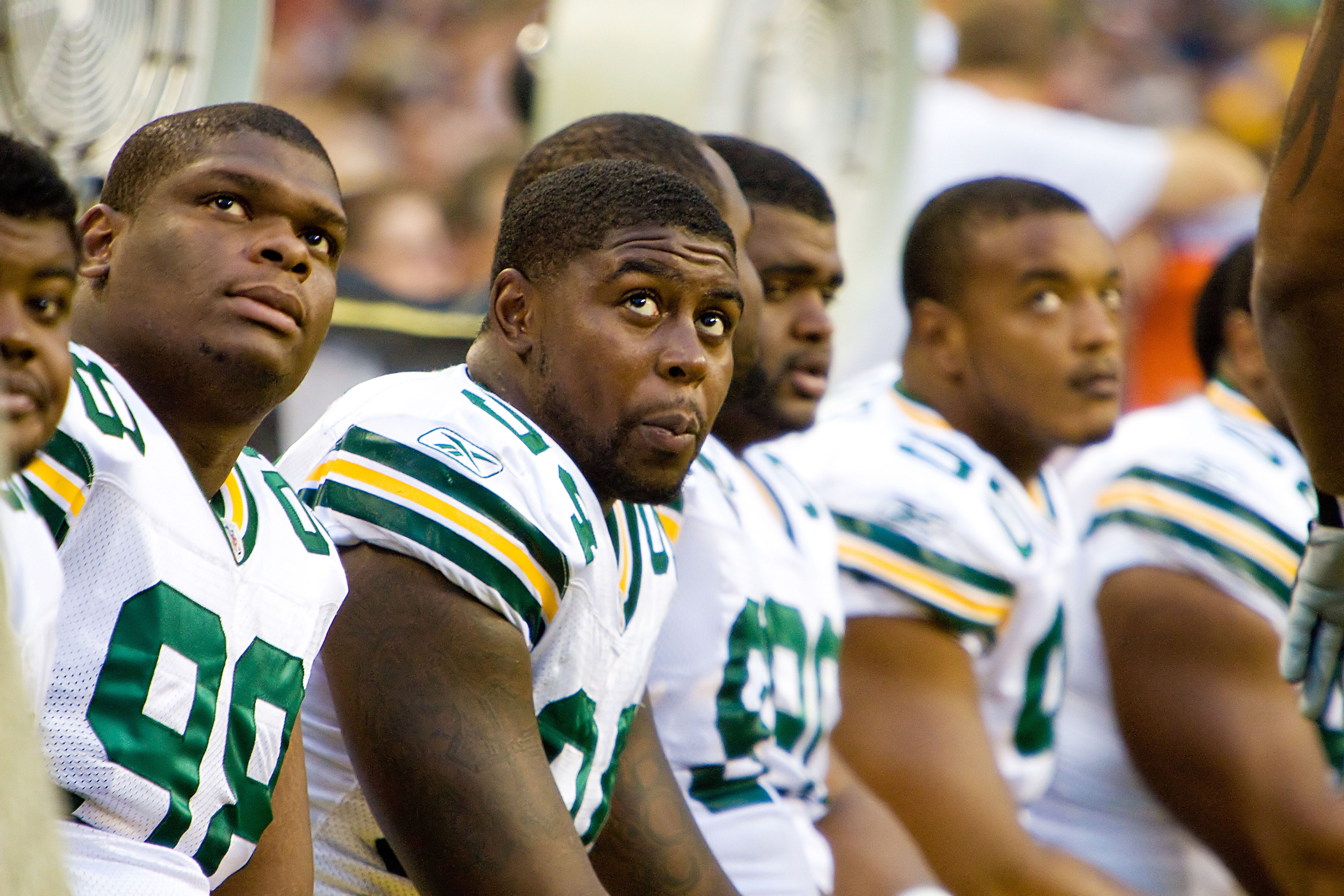
Time out: The NFL won’t be getting involved in prediction markets at this stage and will wait and see “how things play out,” said commissioner Roger Goodell.
When asked about prediction markets during Genius Sports’ investor event yesterday, Goodell said it was “not something we’re about to enter into.”
“We are going to see how things play out, from a regulatory standpoint,” he added. “There are a lot of legal challenges going on right now.”
The first shall be last: Goodell noted the league “likes to be first in the market in a lot of things, but in a lot of things, we’re willing to say, ‘We’re going to let things play out. We’re going to decide, is this something we want to do?’”
He said the “risk to the brand is something we take very seriously, and we won’t risk that brand in something until we feel confident that we can do it.”
“If we see it play out in a way that works for us, whether that’s private equity and ownership of the NFL and our teams, or whether it’s technology issues in sports betting and/or the prediction markets, that’s how we’re going to play.”
Where the puck is going: Goodell’s position contrasts with that of the NHL, which in October announced multiyear agreements with Polymarket and Kalshi.
NHL head of business Keith Wachtel said at the time that prediction markets were a “tremendous opportunity for the broadest fan engagement during the NHL season.”
Hostage… NHL commissioner Gary Bettman said on CNBC this week that the alignment between sports betting and prediction markets gives the NHL more control and the ability to “take down any contracts that we don’t think are appropriate.”
To fortune: Dismissing integrity fears, Bettman said “I don’t believe our game is susceptible in the way that some others might be.”
“You can’t really get away with that kind of cheating anymore.”
Launches
Entering the conversation: Not stopping for any of the regulatory challenges, Polymarket has now officially re-entered the US market while Fanatics has become the first of the leading OSB operators to launch prediction market offerings to customers in ex-regulated states.
Polymarket announced on X that it was rolling out its CFTC-approved offerings to customers across the US.
Notably, the company said it was “launching with sports” followed by markets on “everything else.”
Fan the flames: Ahead of the Polymarket news, sports-apparel giant Fanatics announced the launch of Fanatics Markets, a new prediction platform that will operate in 24 states this week, offering event contracts across sports, finance, economics and politics.
The product places Fanatics inside the same federal CFTC-regulated space currently being tested in litigation involving Kalshi and Crypto.com, with several states arguing these contracts constitute unlicensed sports wagering.
The launch will roll out in phases from Wednesday to Friday, with the final wave covering California, Florida, Georgia, Texas and Washington.
DraftKings (via Railbird) and FanDuel (with CME Group) have also moved into prediction markets, signaling rapid convergence between sportsbooks and event-contract platforms.
Fanatics will use Crypto.com for pricing and will integrate the product into its shared wallet system, allowing cross-access across the wider Fanatics ecosystem.
G-spot: Absent from the Fanatics hyperbole was the word gambling. Speaking to Sportico, Matt King, CEO of Fanatics Betting & Gaming, said what the company was offering was trading.
“If you think about the regulatory context that you sit under with the futures, I think ‘trade’ is the proper vernacular, and so that’s kind of how we refer to it,” he said.
Cut and shut
Cut it out: Meanwhile, Connecticut’s Department of Consumer Protection (DCP) has issued cease-and-desist orders to Kalshi, Robinhood and Crypto.com, arguing their sports event contracts constitute illegal sports wagering in the state.
Regulators said all three firms are operating without a licence and offering wagers to customers under 21.
The DCP said event contracts qualify as sports wagering because they involve risking value on sports outcomes.
Letters from the Gaming Division ordered an immediate halt to advertising and availability in Connecticut.
Officials said the platforms do not comply with state technical standards and offer no consumer protections, citing the absence of integrity controls to prevent insider participation or event manipulation.
The DCP said the companies are misleading customers by suggesting prediction markets are lawful investments.
Boys wanna fight: Kalshi has a record of challenging state orders and is unlikely to withdraw voluntarily; it sued New York two days after receiving a similar notice in October and has doubled in value despite racking up legal bills.
Prediction markets argue the Commodity Exchange Act preempts state gambling oversight. However, states maintain sports outcome contracts fall squarely within wagering laws and licensing regimes.
Connecticut’s action joins an expanding national pattern of states asserting jurisdiction over event contracts.
What we’re reading
Does the UFC have a gambling problem? “The danger for sports is that competition can be reduced to a mere MacGuffin for betting.” The Hollywood Reporter.

Catch the Highlights from Our Inaugural Safer Gambling Week Breakfast Briefing
Mindway AI hosted a successful inaugural Safer Gambling Week Breakfast Briefing at The Law Society Hall with our partners, Vixio. A big thank you to our stellar line-up of speakers who ignited essential discussions on responsible gambling.
Highlights Video
Get exclusive insights from the event, including thought-provoking commentary from Professor Kim Mouridsen, Professor at Aarhus University & Founder of Mindway AI.
Click here to watch the video now!
+More
Brazil: The Senate Economic Affairs Committee has advanced a bill that would raise the current online gambling tax from 12% to 15% in 2026 and then to 18% in 2028. The bill now moves to the Chamber of Deputies unless it is called for a vote in the Senate. Critics, notably the Brazilian Institute for Responsible Gaming, have warned the hike could “destroy” the regulated market and drive millions of bettors into the black market.
Hard Rock Bet has launched online sports betting and casino gaming in Michigan through a partnership with the Hannahville Indian Community’s Island Resort & Casino, replacing Sports Illustrated as the tribe’s digital operating partner.
The Curaçao Gaming Authority (CGA) has denied knowing about any criminal investigation into itself, despite a recent letter from the Curaçao and Sint Maarten Financial Supervision Board saying the Public Prosecution Service reportedly was probing the regulator. The CGA has formally asked the government for clarity, calling the reports an “unexpected and negative surprise.” Meanwhile, the Public Prosecutor’s Office said it could neither confirm nor deny the probe.
Google has updated its US gambling and games advertising policy to ban any ads from affiliates, aggregators, tipster sites or other third-party promoters that push online horserace betting. Existing certifications for horseracing aggregator advertisers have been revoked and no new ones will be accepted.

Technical Compliance Manager – Limassol
Compliance Analyst – Newcastle, UK
Regulatory Compliance Manager – Limassol
Fred again
Un-Done: The UK Gambling Commission has imposed an £825,000 fine on Done Brothers, the operator of the high-street bookmaker Betfred, after a compliance assessment uncovered serious social responsibility and anti-money-laundering failures.
It is the company’s second fine in the space of two years after it paid a £3.25m regulatory settlement in 2023.
In addition to the new fine, the company has been issued a formal warning and had a new license condition imposed requiring a third-party audit of its AML and safer-gambling policies.
Lost control again: Among the findings this time around, the Commission said the bookmaker lacked effective controls to monitor potential money laundering associated with customers using B3 gaming machines.
Alerts and daily reports were insufficient, leaving the firm unable to properly assess overall customer spend or related financial crime risks.
Thresholds for triggering source-of-funds checks, at £125,000 stakes or £15,000 losses over 365 days, were deemed insufficiently risk-based.
On the safer-gambling side, the firm failed to reliably identify signs of gambling harm among B3 machine users.
When risk indicators emerged, required customer interactions either did not occur or, when they did, were not conducted effectively.
In its enforcement note, the Commission’s director of enforcement John Pierce stressed that although the 2024 failings were “predominantly technical breaches rather than arising from specific customer examples,” they were still “unacceptable.”
He added this was especially so given “thresholds appear[ed] too high and insufficiently risk-based.”
Unibet’s Dutch fine
Decked: The Dutch gambling regulator has hit Unibet’s Dutch operator, registered as Optdeck Service, with a €4m fine for failing its “duty of care” obligations between July 2022 and July 2024. The KSA found Optdeck repeatedly neglected timely intervention for excessive gamblers. Some affordability checks incorrectly treated business account funds as personal income, further breaching regulations.

GuardDog, powered by Underdog, is a pioneering investment fund dedicated to fostering innovation in responsible gaming.
GuardDog supports and accelerates early-stage startups focused on building new and creative solutions to address problem gaming and further responsible gaming.
Ready to be one of the underdogs of responsible gaming?
Visit to apply: https://underdogfantasy.com/guarddog
Alberta planning
Board works: Alberta has begun recruiting board members for the new Alberta iGaming Corporation (AiGC), the entity that will legally “conduct and manage” a competitive online gambling market and oversee agreements with private operators.
The board will set strategy, supervise operator contracts, manage revenue flows and prepare the province for an expected 2026 launch.
The AiGC was created earlier this year through legislation that mirrors the structure of iGaming Ontario, and will serve as the contracting body through which private operators such as DraftKings and FanDuel enter the market.
Applicants have until December 10 to fill five board vacancies, including chair and vice-chair, with an interim CEO expected shortly and a permanent CEO to follow.
Here comes the boom: Dale Nally, Alberta’s Minister of Service Alberta and Red Tape Reduction, said a regulatory framework is still being drafted, and will include systemwide self-exclusion, operator registration processes, revenue-sharing rules and advertising standards.
Alberta’s model is designed to pull activity out of the “gray market,” as Play Alberta, the region’s only regulated online operator, currently captures less than half of online gambling spend.
The province aims to replicate Ontario’s transition, which has moved most iGaming activity onto more than 80 regulated sites.
The AiGC will manage operator agreements and reconcile revenue on behalf of the province, while the Alberta Gaming, Liquor and Cannabis Commission will act as the regulator, creating a dual role as both operator (Play Alberta) and market supervisor.
Alberta expects to finalize regulations “soon,” with full market details to be released in early 2026.
Betway ad ban
Fable of a failed race: The UK Advertising Standards Authority (ASA) has ruled that a Betway Facebook ad referencing Formula One driver Lewis Hamilton broke rules prohibiting gambling promotions from featuring individuals of strong appeal to under-18s.
The paid post used a rear-view image of a race-suited figure labeled “Hamilton” to promote the British Grand Prix, but the ASA said minors would still clearly recognize the seven-time world champion.
Betway argued it had limited Hamilton’s visibility and targeted the campaign at over-25s, but the regulator highlighted Facebook’s weak age controls and Hamilton’s extensive youth following.
The ASA found the ad irresponsible because Hamilton’s profile meets the threshold for strong appeal to minors.
Betway has been told not to use similar imagery again and to avoid personalities with significant youth appeal in future campaigns.
Calendar
Feb 19: SBC Digital Compliance Technology, online
Apr 28-29: Ethical Gambling Forum 2026, Leeds
May 26-28: Gambling & Risk Taking Conference, Las Vegas

Increase Operator Margins with EDGE Boost Today!
EDGE Boost is the first dedicated bank account for bettors.
Increase Cash Access: On/Offline with $250k/day debit limits
No Integration or Costs: Compatible today with all operators via VISA debit rails
Incremental Non-Gaming Revenue: Up to 1% operator rebate on transactions
Lower Costs: Increase debit throughput to reduce costs against ACH/Wallets
Eliminate Chargebacks and Disputes
Eliminate Debit Declines
Built-in Responsible Gaming tools
To learn more, contact Matthew Cullen, chief strategy officer on Matthew@edgemarkets.io
An +More Media publication.
For sponsorship inquiries email scott@andmore.media.

Brilliant piece on the divergent strategies here. Goodell's watch-and-wait posture is actually a textbook example of how institutional brand risk calculus differs from pure market opportunism. The NFLs reluctance isnt about missing the moment, its about whether prediction markets can scale withouteroding the core product's percieved integrity. If every game becomes just another contract settlement event, does fan engagement shift from sports to speculation?