

The long shot
Entain presses on with campaign against black-market marketing

CEO Stella David continues her beef with the football authorities.
Breaking: Wisconsin court says Ho-Chunk Nation tribe can sue Kalshi.
Court presses Kalshi on whether sports events contracts are sports betting.
Dutch parliamentarians consider ad ban as a protection measure.
Yaspa is an award-winning fintech delivering personal intelligence through instant payments. Powered by open banking and AI, Yaspa’s Intelligent Payments combine Pay by Bank transactions with verified customer insights to protect players and power safer gambling. The platform also provides a full suite of payment and account verification services, using pan-operator financial insights and bank-grade security to reduce friction and fraud, strengthen compliance and improve payments performance. Yaspa operates across the UK, Europe and the US, and is regulated by the UK’s Financial Conduct Authority.
Learn more at www.yaspa.com
Oi, ref!
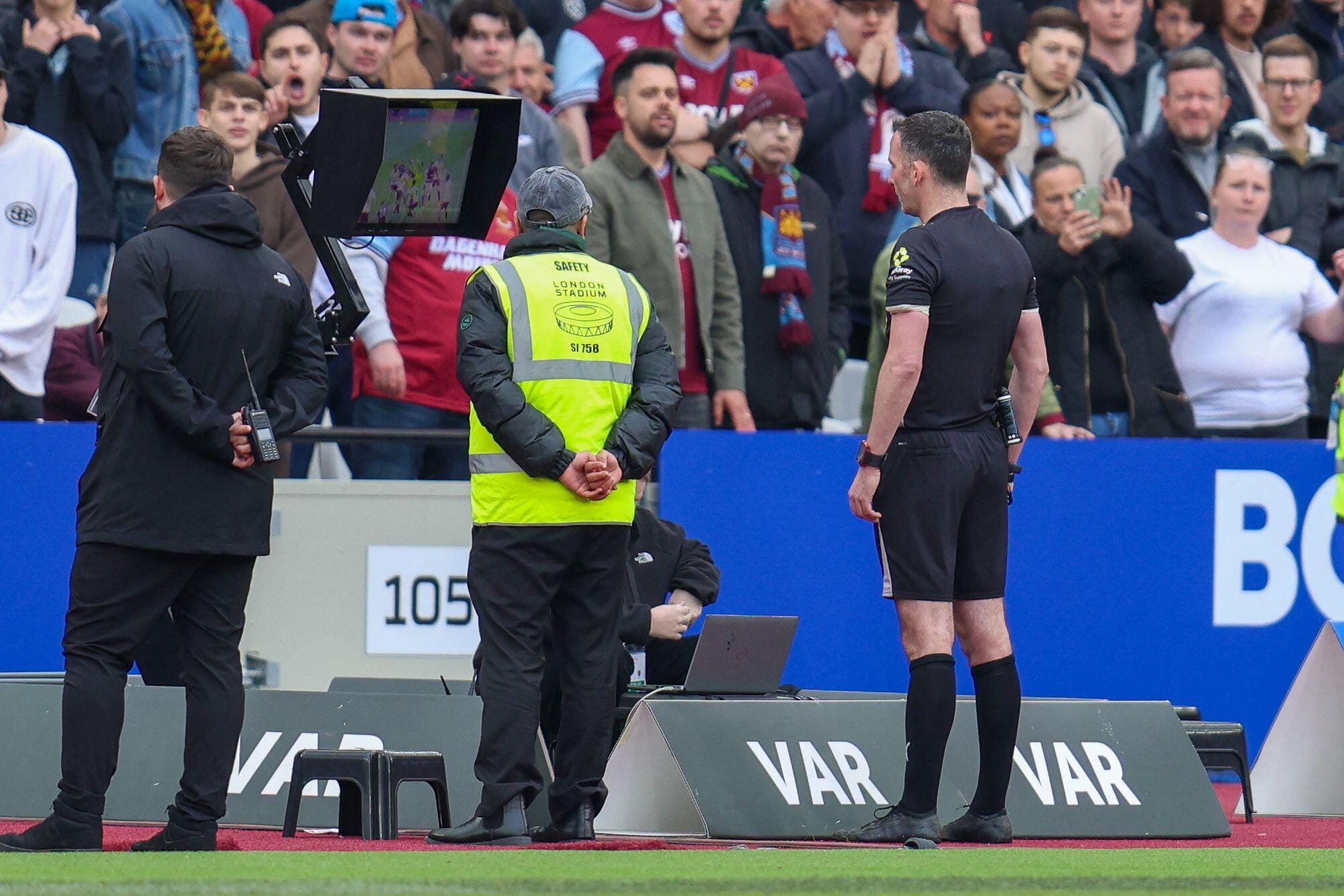
Who’s the wanker in the black? Entain claims that a single line of guidance from the UK’s Independent Football Regulator (IFR) could immediately remedy the situation whereby black-market operators are able to advertise their offerings to UK customers.
The IFR is currently seeking views on a licensing regime for the top five tiers of English football.
You’re not fit to referee: The draft document contains a line about prohibiting clubs from accepting income “connected to serious criminal conduct.” Entain is asking in its submission to the IFR that this rule be applied to the situation of clubs accepting sponsorship from currently unlicensed gambling operators.
The company noted that such operators commit a criminal offence under section 33 of the Gambling Act 2005 every time they accept a bet from a British consumer.
You don’t know what you’re doing: A spokesperson for Entain admitted the effort to push the issue of black-market advertising around English football onto the agendas of either the government or the football authorities was somewhat forlorn.
But they insisted it was still worth a try. “This might be considered something of a long shot,” they told C+M.
“We are concerned – and forgive the pun – that the authorities seem only too happy to punt this issue into the long grass,” said a source close to Entain.
Second yellow: In February, Entain previously lambasted the Premier League over its apparently lax attitude to the sponsorship of football clubs, particularly front-of-shirt advertising, by gambling operators that do not have a license in the UK.
The company called a game taking place in late February between Bournemouth and Sunderland the “black-market derby.”
Bournemouth is sponsored by BJ88 while Sunderland has W88 as its front-of-shirt sponsor.
Fourth official: The government announced a consultation exercise to be undertaken by DCMS back in February, with Culture minister Lisa Nandy saying it was “not right that unlicensed gambling operators can sponsor some of our biggest football clubs, raising their profile and potentially drawing fans towards sites that don’t meet our regulatory standards.”
However, sources suggested there are fears that the process will take far longer than necessary at a time when the sponsorship of football remains a live issue.
Apply the laws of the game: Entain CEO Stella David hammered home the message that the Premier League is effectively facilitating criminal gambling activity.
“The Independent Football Regulator can stop this tomorrow by simply acknowledging that unlicensed gambling companies targeting UK customers through English football are breaking the law – plain and simple,” she said.
“The regulator does not need any new powers, new legislation, or even a new rule to make this happen.”
“In fact, it has already drafted one. We are asking the regulator to define and apply it before the next season begins.”
“The IFR was created to fix English football’s governance failures. This is one of them.”
Going to VAR: Alongside the suggestion that black-market gambling activity should be considered as serious criminal conduct, Entain’s submission to the IFR sets out further specific recommendations.
These include a board attestation requiring directors to verify the license status of any gambling operator with which the club holds a significant commercial arrangement.
A strengthening of the Football Club Corporate Governance Code to require boards to treat reputational risk from commercial partnerships as a standing governance responsibility.
And the publication of general guidance applicable to all licensed clubs, setting out the due diligence and notification obligations that apply to gambling commercial partners.
Entain argued that a club-by-club discretionary license condition approach is inadequate for what is plainly a market-wide problem: systemic risks require systemic responses.

GuardDog, powered by Underdog, is a pioneering investment fund dedicated to fostering innovation in responsible gaming.
GuardDog supports and accelerates early-stage startups focused on building new and creative solutions to address problem gaming and further responsible gaming.
Ready to be one of the underdogs of responsible gaming?
Visit to apply: https://underdogfantasy.com/guarddog
Breaking
Big cheese: A Wisconsin federal court has said the Ho-Chunk Nation tribe can sue Kalshi for violating the Indian Gaming Regulatory Act (IGRA). In a Monday opinion, the court said the prediction market firm had violated a protected tribal-state gaming compact.
Kalshi offered sports event contracts on Indian lands without consent, the court found, adding that the tribe is likely to win on merits of an IGRA claim.
Gaming attorney Dan Wallach told C+M the decision was “a huge development for tribes.”
Industry watchers believe the opinion could spark similar lawsuits in states where tribes have exclusivity, such as Florida.
+More
Minnesota: A bill banning prediction markets was passed by a Minnesota joint conference committee on Friday and now heads back to the House and Senate for approval in the respective chambers. HF 4760 includes language from a previous bill, SF 4511, banning event contracts on sports, politics, government actions, disasters, war, terrorism and death. The bill cannot be further amended and if passed by both chambers it will go to Gov. Tim Walz for final approval. The move sets up a likely federal showdown. Semafor reported earlier last week that if Minnesota proceeds with the ban, the Commodity Futures Trading Commission (CFTC) is expected to sue. CFTC chair Michael Selig is reportedly “monitoring” the situation. The agency is already entangled in litigation with Arizona over similar issues.
Pennsylvania: Lawmakers are considering a regulatory and tax framework for prediction markets under HB 2497. The bill would place oversight under the Pennsylvania Gaming Control Board, impose $1m annual licensing fees and a 22% GGR tax, while banning insider trading and restricting accounts to users aged 21 and over.
Colombia: Consejo Nacional de Juegos de Suerte y Azar (CNJSA) has approved a new agreement requiring online operators to have responsible gambling practices. The agreement, which was adopted on April 23, will apply to lottery, permanent bets or chance, and Raspa&Listo.
Chinese police are hunting gamblers who gather in abandoned buildings, fields and forests in an attempt to evade detection. Officers in the Honggu District of Lanzhou, in Gansu Province, recently arrested 34 people found in an abandoned house on a commercial street. The raid was part of a crackdown codenamed Operation Spring Thunder.
Sports integrity
Integrity Compliance 360 and the PGA of America have expanded their sports integrity partnership ahead of the 2026 PGA Championship at Aronimink Golf Club. The PGA of America will deploy IC360’s ProhiBet and ProhiTrade platforms to strengthen compliance monitoring around sports betting, event contracts and prediction markets. The systems are designed to prevent prohibited participants from wagering on golf events and detect potential misuse of non-public information tied to prediction-based trading activity. PGA executives said the move reflects a proactive approach to evolving wagering and digital trading risks.
Court press
Who are you: A three-judge panel of the US Court of Appeals for the Fourth Circuit has pressed Kalshi over whether its prediction-market contracts are federally regulated swaps or simply sports betting under a new name.
In court, Kalshi argued that federal commodities law preempts Maryland and other states from regulating its designated contract market, maintaining that its binary event contracts sit under the Commodity Futures Trading Commission’s (CFTC) authority.
State regulators and attorneys general have countered that the products function as sports betting and belong under state control.
“This just seems like gambling,” said Judge Stephanie Thacker.
Meet me in the middle: Courts are now weighing in on the gray area prediction markets are exploiting between federal derivatives law and states’ long-standing role in licensing, taxing and policing wagering activity.
A ruling for Kalshi could narrow states’ ability to regulate and tax event-based markets, while giving operators a path to offer betting-style products without state gaming licenses.
The Fourth Circuit will issue a written opinion after considering the arguments, with any major ruling likely to invite further appeals given the stakes for both state regulators and federally supervised prediction markets.
The write stuff
Wait a minute, Mr Postman: As the Commodity Futures Trading Commission’s (CFTC) prediction-market comment window draws to a close, a glut of submissions from across the spectrum has flooded the docket with more than 3,500 filings.
The consultation, opened in March through an advance notice of proposed rulemaking, asked whether the CFTC should amend or create rules for event contracts tied to outcomes such as elections, sports and entertainment.
Among the industry groups, state regulators, tribal gaming interests, academics, politicians and individual bettors, the main players Kalshi, Polymarket and Coinbase unsurprisingly lobbied to underline how prediction markets are derivatives, not gambling, and should remain under federal supervision rather than state-by-state control.
The NCAA and NBA have also weighed in, with NCAA president Charlie Baker urging the commission to suspend college sports markets until stronger rules are in place: “The answer cannot be the status quo. We need one set of fair, transparent standards.”
The NBA said basketball-related prediction markets create the same integrity risks as sports betting and should face tight restrictions, including blocks on trading by players, referees and team staff, suspicious-trade reporting, under-21 limits and curbs on player, officiating and injury markets.
Point yourself in the right direction: One of the most intriguing responses came from leading derivatives and securities exchange network Cboe, which urged the CFTC to tighten, not loosen, the rules.
The exchange’s general counsel, Patrick Sexton, argued that “investor trust is the North Star” and warned that some current practices are “eroding investor trust and confidence and jeopardizing the legitimacy and future of prediction markets.”
In the letter, Cboe said some platforms are listing contracts with ambiguous settlement standards, weak manipulation controls and no obvious hedging or price-discovery purpose, while also offering products that appear to be securities rather than swaps.
Event contracts tied directly to the value of securities indexes are “in substance and law, binary options on securities indices,” said Sexton, and the letter told the commission to delist any such products from CFTC-regulated designated contract markets.
It also called for a formal regulatory review process before new products go live, plus stricter guidance on insider trading controls, manipulation risks, credible data sources, clearer settlement terms and narrower, more transparent self-certifications.
“Transparency is not an obstacle to innovation,” Cboe wrote. “It is a safeguard that improves design quality, highlights conflicts, and strengthens confidence in emerging markets.”

Increase Operator Margins with EDGE Boost Today!
EDGE Boost is the first dedicated bank account for bettors.
Increase Cash Access: On/Offline with $250k/day debit limits
No Integration or Costs: Compatible today with all operators via VISA debit rails
Incremental Non-Gaming Revenue: Up to 1% operator rebate on transactions
Lower Costs: Increase debit throughput to reduce costs against ACH/Wallets
Eliminate Chargebacks and Disputes
Eliminate Debit Declines
Built-in Responsible Gaming tools
To learn more, contact Matthew Cullen, chief strategy officer on Matthew@edgemarkets.io
Dutch ad moves
Safety first: The Dutch government is considering whether to implement a total ban on gambling advertising, as policymakers intensify scrutiny of player protection measures and the effectiveness of the country’s regulated online gambling framework.
The debate follows parliamentary responses from state secretary Claudia van Bruggen acknowledging limitations within the national self-exclusion register, Cruks.
While the system is designed to block vulnerable players from licensed gambling platforms, Van Bruggen admitted it cannot fully prevent those users from being exposed to gambling marketing or accessing offshore operators.
Escalator: The comments mark the latest escalation in the Netherlands’ increasingly restrictive approach to gambling advertising since the launch of its regulated online market in 2021. An initially liberal framework has progressively tightened promotional rules amid political and public concerns over gambling harm.
Untargeted gambling advertising across television, radio, newspapers, billboards and public spaces was banned in July 2023.
Restrictions were expanded in 2024 to prohibit event and programme sponsorships.
Additional measures introduced in 2025 outlawed gambling sponsorships tied to sports teams, competitions, venues and jersey branding.
In profile: Although targeted advertising remains permitted, operators must comply with strict profiling requirements designed to avoid vulnerable groups and younger adults.
However, Dutch policymakers appear increasingly unconvinced that those safeguards are sufficient.
The pressure on the market has intensified following several recent controversies involving advertising exposure. Research earlier this month found examples of gambling promotions on Meta platforms being shown to users aged between 18 and 24, despite Dutch rules classifying that demographic as vulnerable and prohibiting operators from actively targeting them.
At the same time, the Dutch regulator Kansspelautoriteit reportedly filed more than 4,600 complaints with Meta regarding illegal gambling advertisements linked to unlicensed operators.
Wet blanket: The prospect of a blanket advertising ban has alarmed licensed operators and trade groups, which argue excessive restrictions risk driving consumers toward offshore gambling platforms.
Björn Fuchs, chair of online gambling body VNLOK, previously warned that the Dutch regulatory model depends on maintaining visibility for regulated operators so players can distinguish legal offerings from black-market alternatives.
Calendar
May 26-28: Gambling & Risk Taking Conference, Las Vegas
Jun 4: Gaming in Holland, Amsterdam
Jun 10-11: Player Protection Symposium, Fort Lauderdale

Fresh off the back of our U.S. focused webinar “Beyond the Month Webinar 2026: The Future of Player Protection in the US: Trends, Innovations, and Challenges”, the Mindway AI team will be attending some key upcoming North American events.
University of Nevada-Las Vegas Gambling & Risk Taking Conference, Las Vegas, May 26-28
International Association of Gaming Advisors (IAGA) International Gaming Summit, Florida, June 2-4
SBC Summit Americas, Florida, June 9-11
We look forward to connecting with industry leaders at these events. Drop us a message to arrange a meeting contact@mindway.ai
An +More Media publication.
For sponsorship inquiries email scott@andmore.media.
